BMI vs Body Fat % – Which Is Important?

BMI and body fat percentage are often treated as interchangeable — but they measure very different things. One is a population-level screening tool. The other describes body composition.
This guide explains how BMI works, why it breaks down for individuals, and when body fat percentage is the more meaningful metric.
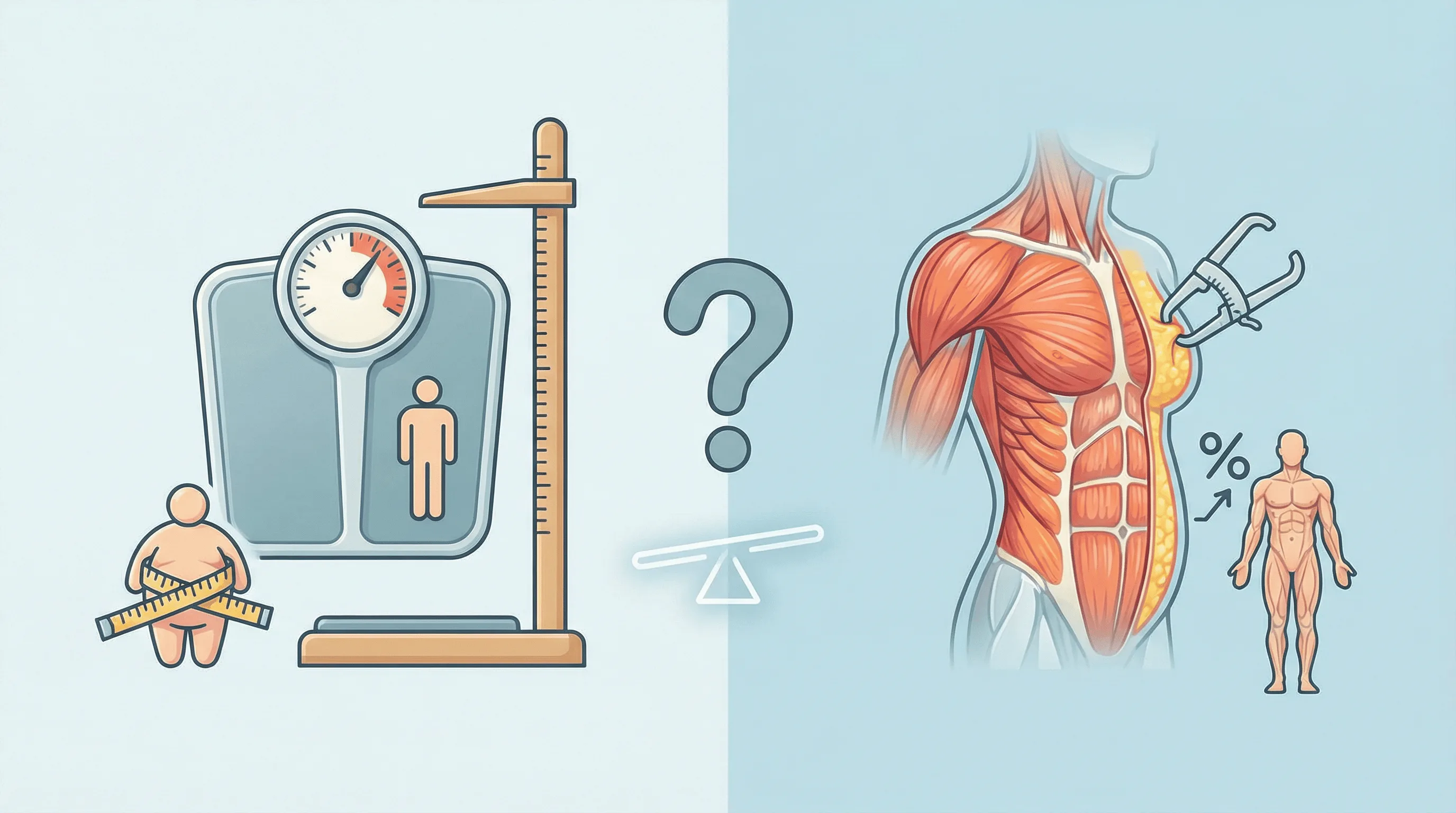
What BMI actually measures
BMI (Body Mass Index) is calculated using only height and weight. It does not measure fat, muscle, bone density, or body composition. You can run a direct BMI check with the BMI Calculator.
It was designed as a population-level screening tool, not a diagnostic or individual health assessment. BMI works reasonably well when averaging across millions of people — and poorly when applied to a single person.
Why BMI often fails individuals
Because BMI ignores body composition, it regularly misclassifies people:
- Muscular individuals may be labeled “overweight” or “obese”
- People with low muscle mass may appear “healthy” despite high body fat
- Two people with identical BMI can have drastically different physiques
BMI is blind to the difference between a heavy squat and a heavy soda. It also misses why people with similar percentages can look very different, which is covered in Why Two People at the Same Body Fat Percentage Look Different.
What body fat percentage tells you instead
Body fat percentage estimates how much of your total body mass comes from fat tissue. Unlike BMI, it attempts to describe what your weight is made of.
This makes body fat percentage more useful for:
- Tracking fat loss or gain over time
- Understanding appearance changes
- Comparing progress independently of scale weight
Appearance, health, and context
BMI is sometimes still useful in medical or public health settings where speed and standardization matter. Body fat percentage is more useful for individuals trying to understand their own bodies.
Neither metric is perfect. Body fat percentage itself varies by measurement method, lighting, hydration, posture, and muscle mass. That’s why interpretation matters more than the number itself.
Which should you actually care about?
For most individuals:
- BMI is a rough screening shortcut
- Body fat percentage provides more actionable insight
- Trends over time matter more than single readings
If your goal is to look leaner, track fat loss, or understand body composition changes, BMI will quickly become noise. If you also want to separate lean-mass progress from fat changes, use the FFMI Calculator and the Muscle Mass Calculator alongside body-fat tracking. For skeletal-build context, add the Body Frame Size Calculator. For waist-centered roundness, compare with the BRI Calculator. For hip-height adiposity context, add the BAI Calculator. For weight-target planning, add the Ideal Weight Calculator and Weight Loss Calculator. To convert goals into calorie targets, run the Calorie Calculator and Calorie Deficit Calculator.
For height-weight-only screening variants, compare your weight above the healthy BMI ceiling, check the ponderal index alternative, and contrast with the Broca reference method.
References
Read More →
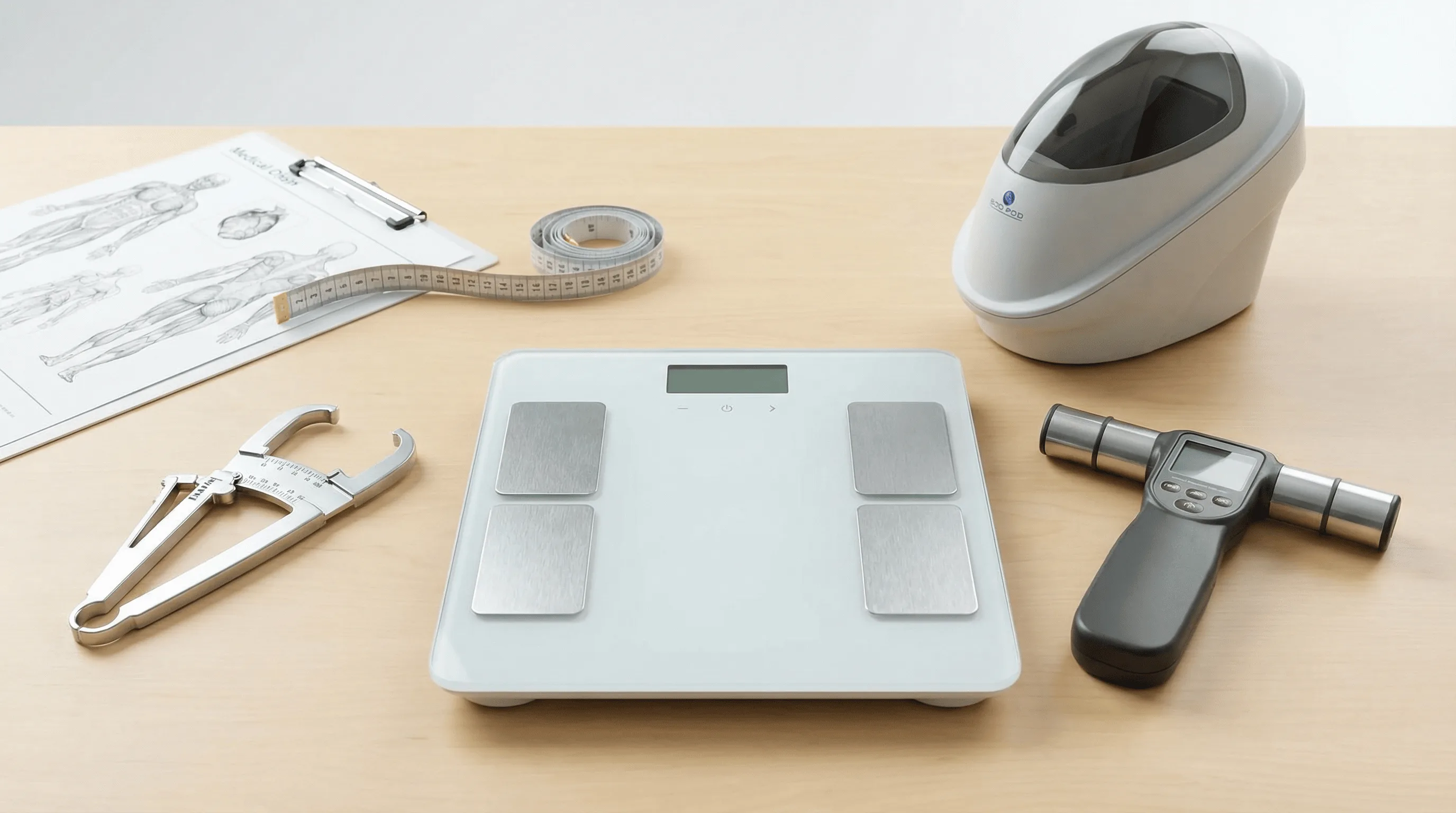
Common Body Fat Estimation Methods Explained
An overview of the most common body fat measurement methods — including the Navy tape method, skinfold calipers, BIA smart scales, and DEXA scans — with clear guidance on when each method makes sense.

The 3 Best Ways to Measure Your Body Fat % at Home
Compare AI photo estimation, the Navy Method, and DEXA scans for body fat estimation. Learn the tradeoffs between cost, precision, accessibility, and which method makes sense for your goals.
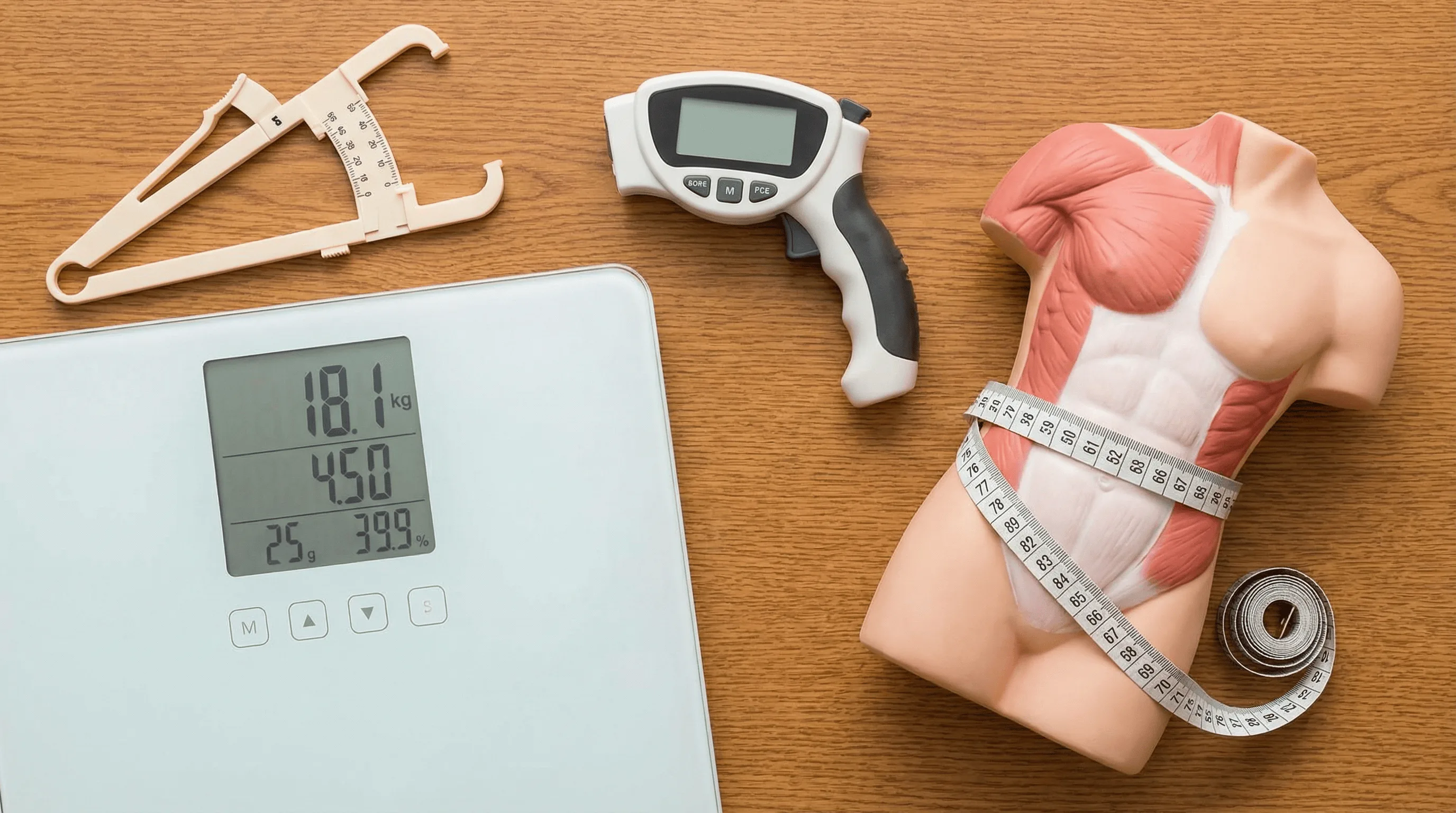
Why Body Fat Estimators Give Different Results
Why do body fat estimators give different numbers? Learn how formula assumptions, hydration, timing, and measurement noise affect body fat percentage estimates — and how to interpret changes realistically.
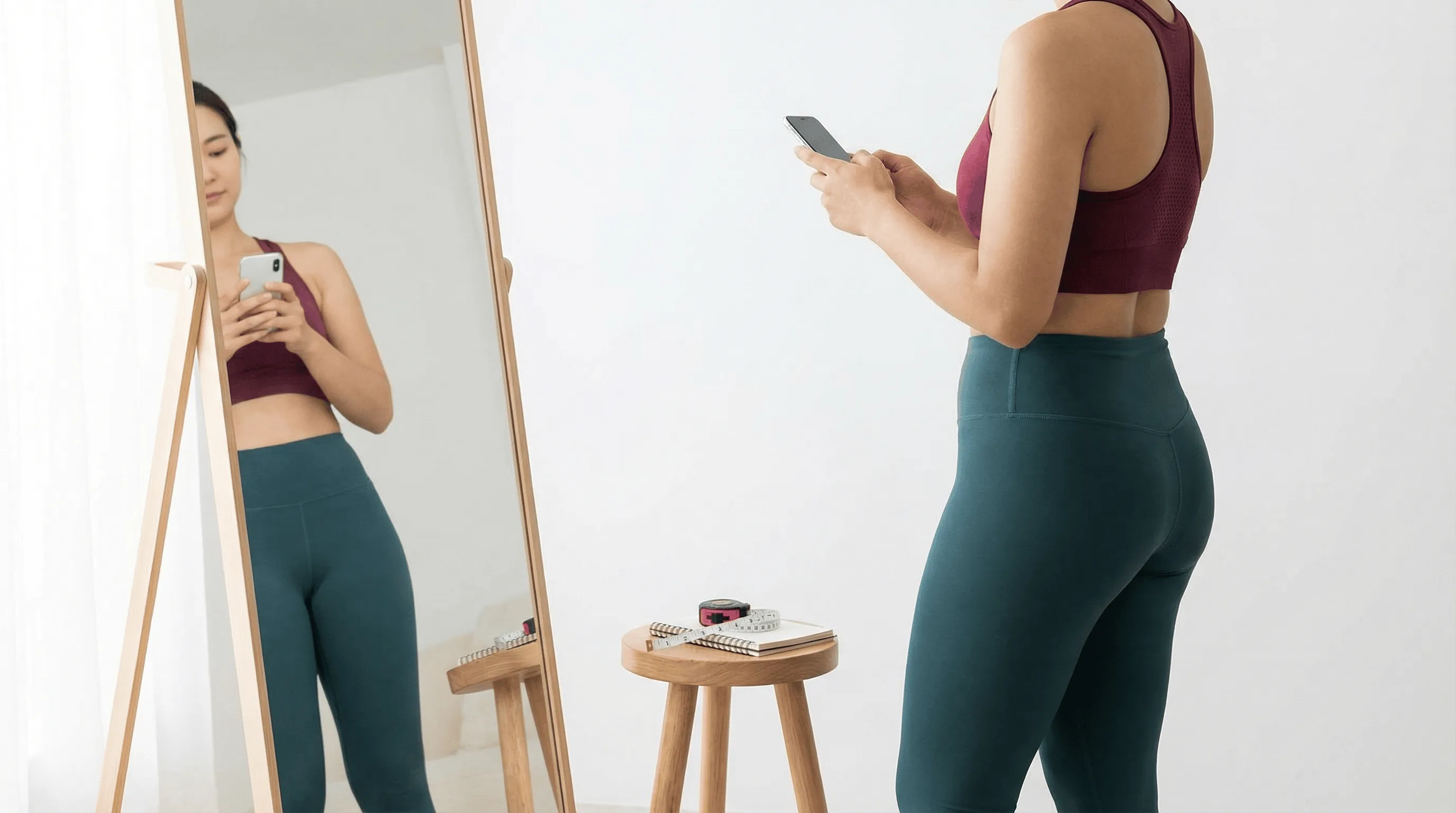
How to Take Photos for Body Fat Estimation
Learn how to take consistent body fat photos for estimation and progress tracking, including lighting, pose, camera setup, and common mistakes to avoid.