The 3 Best Ways to Measure Your Body Fat % at Home

The “best” body fat method isn’t the one with the fanciest science — it’s the one you can repeat consistently enough to spot real trends.
For most people at home, that winner is consistent progress photos + an AI estimate. It’s appearance-aligned, low effort, and brutally practical for tracking change over time.
This guide explains why that’s the #1 choice, and when the Navy Method or a DEXA scan is still worth using.

What “best” actually means for at-home tracking
When people ask for the “best” body fat method, they’re usually mixing three different goals:
- Precision (how close is it to a true value?)
- Consistency (can I repeat it reliably?)
- Accessibility (can I actually do it often?)
At home, accessibility and consistency usually matter more than perfect precision — because fat loss happens slowly, and noise happens fast.
#1: Consistent photos + AI estimation (best for real life)
AI photo-based body fat estimation analyzes visual cues in photos — proportions, silhouette, and fat distribution — to estimate body fat directionally.
It doesn’t “measure” fat like a lab scan. Its strength is that it aligns with what people actually care about: how their body looks, and whether it’s changing over time.
Best for: frequent check-ins, appearance-based tracking, and building a clean trend line over weeks.
The Navy Method (tape measurements)
The Navy Method estimates body fat using tape measurements of the waist, neck, and sometimes hips. It’s popular because it’s simple and requires no equipment beyond a tape measure. You can run the method directly in our Body Fat Calculator and compare lean-mass-only estimates in the Lean Body Mass Calculator. For waist-to-height roundness context, add the BRI Calculator. For hip-to-height adiposity, compare with the BAI Calculator. If you prefer calipers, the Skinfold Body Fat Calculator uses site-based measurements.
The downside is that it relies on formulas and averages. Small measurement errors can change results, and it doesn’t account well for muscle mass or fat distribution.
Best for: low-cost estimating if you’re careful and consistent with measurements.
DEXA scans (most precise, but not “at home”)
DEXA scans use X-ray imaging to estimate body composition, including fat mass, lean mass, and bone density. They’re often treated as a reference standard.
While DEXA is precise, it’s expensive, time-consuming, and impractical for frequent tracking. Results can also vary slightly between machines and facilities. For a full price breakdown, see How Much Does It Cost to Measure Body Fat?.
Best for: an occasional baseline or “calibration” point — not weekly tracking.
Quick comparison
- Cost: AI (low) → Navy (low) → DEXA (high)
- Precision: DEXA (high) → AI/Navy (moderate)
- Consistency: AI (high with a consistent setup) → Navy (medium)
- Accessibility: AI (very high) → Navy (high) → DEXA (low)
If your main goal is scale-target planning, layer in the Weight Loss Calculator and Weight Loss Percentage Calculator. For quick screening context from height and weight, use the BMI Calculator. For maintenance and intake targets, add the Calorie Calculator and Calorie Deficit Calculator plus movement-based output with the Steps to Calories Calculator.
The verdict: what you should actually do
If your goal is at-home progress tracking, the #1 move is simple: take consistent photos and use the same estimation method every time.
DEXA can be a great one-time reference. The Navy Method can work if you measure carefully. But for most people, AI photo estimation wins because it’s repeatable and appearance-aligned.
References
Read More →
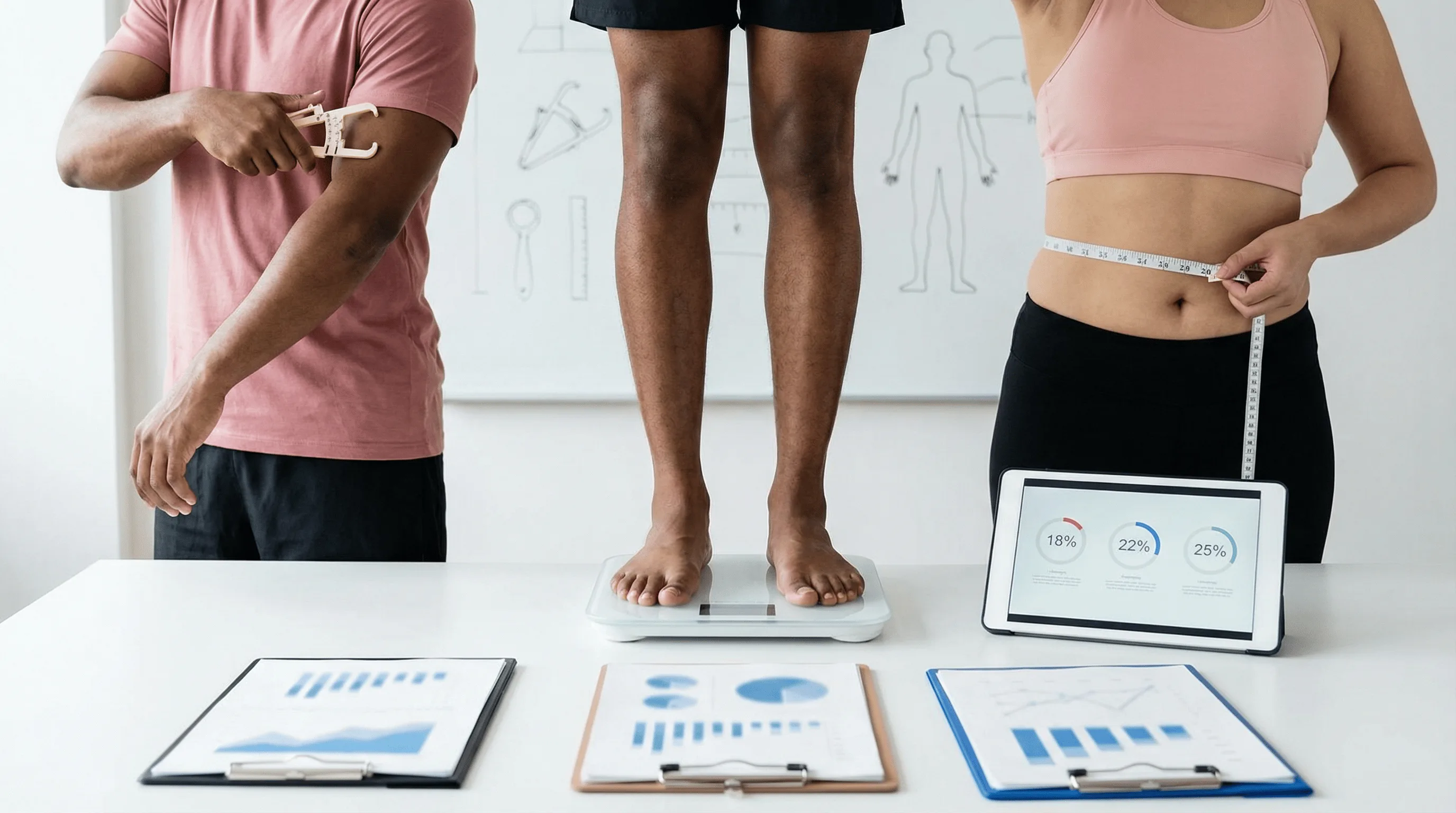
Why Body Fat Measurement Methods Give Different Results
DEXA, smart scales, calculators, and visual estimates often disagree. Learn why body fat measurement methods give different results and how to interpret them correctly.
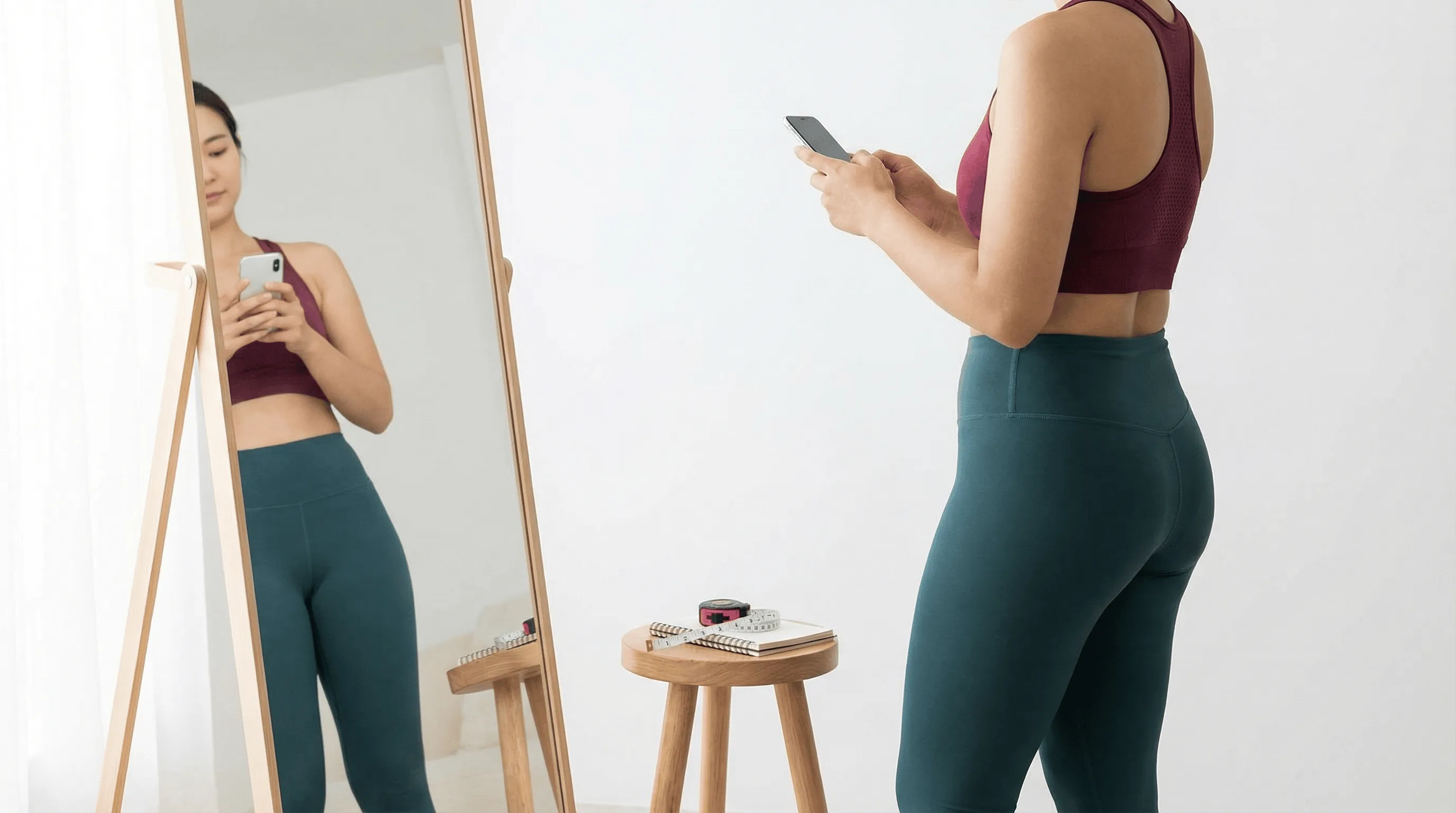
How to Take Photos for Body Fat Estimation
Learn how to take consistent body fat photos for estimation and progress tracking, including lighting, pose, camera setup, and common mistakes to avoid.
How Often Should You Measure Body Fat?
How often should you measure body fat? Learn how measurement frequency affects accuracy, why daily checks create noise, and how to track progress realistically.
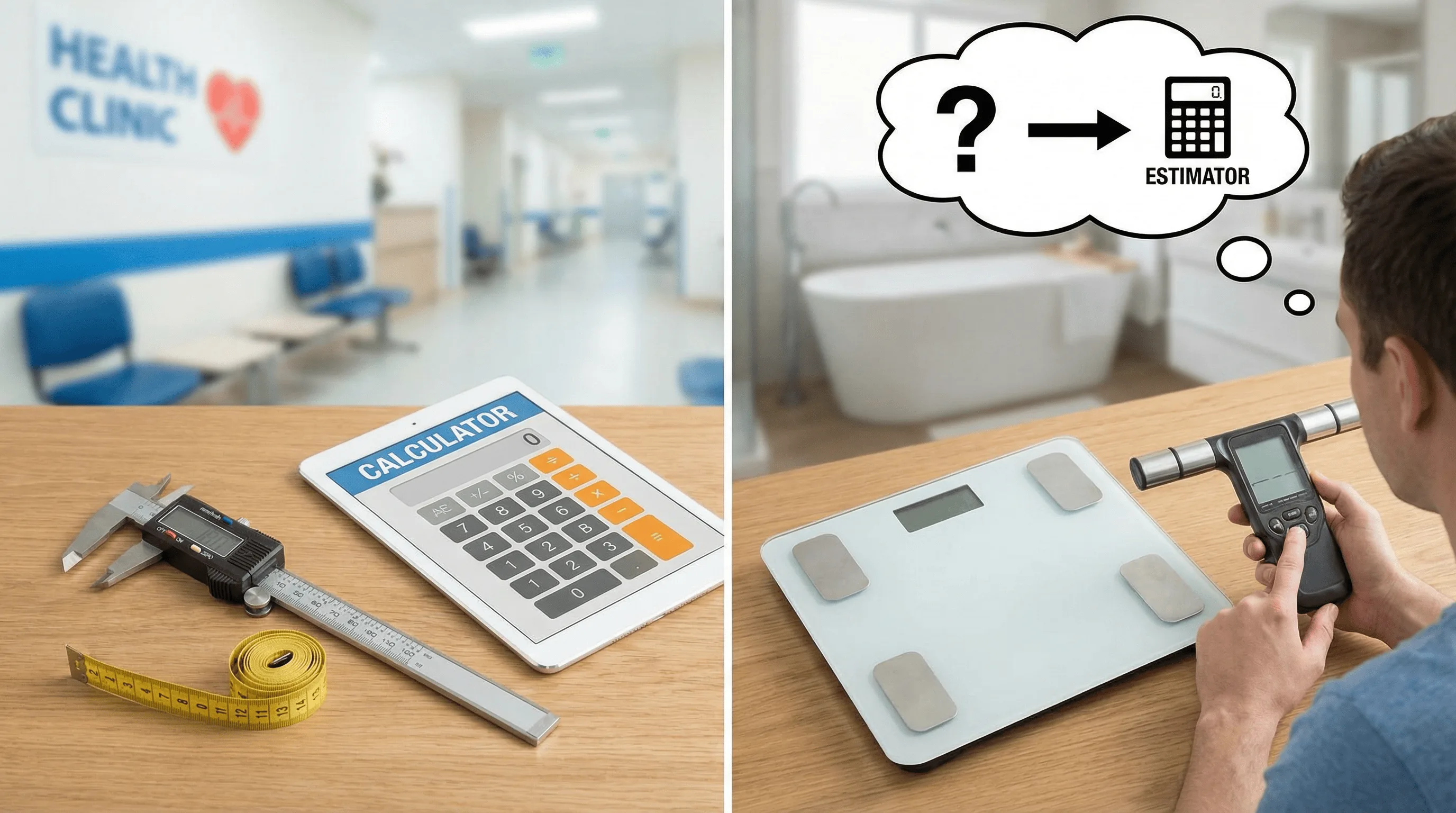
Body Fat Calculator vs Body Fat Estimator — What’s the Difference?
Learn the difference between body fat calculators and estimators, why they give different numbers, and which method is best for tracking progress at home.